

How to Simplify Multicloud Management Without Adding More Cloud Complexity

For many enterprises, multicloud was never a single architectural decision. One business unit adopted Azure. An acquired company arrived with workloads on AWS, and a new application required services from another provider. Regulatory or data residency requirements kept certain workloads within a particular environment. Over time, what began as individual technology decisions became a multicloud estate. That distinction matters.

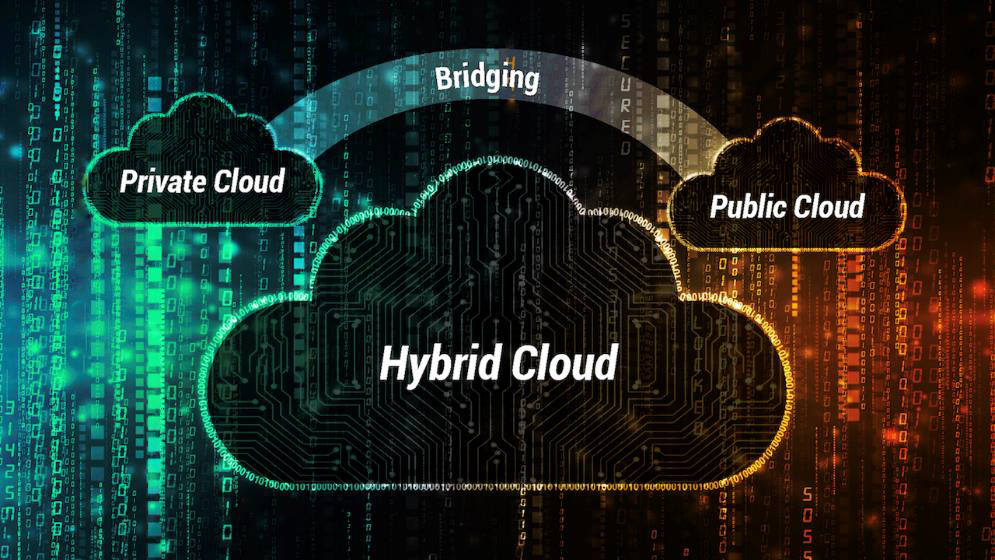
Flexera's 2026 State of the Cloud research shows that hybrid cloud remains the dominant enterprise architecture, while multicloud adoption continues to increase. But multiple clouds do not necessarily indicate a deliberate multicloud strategy. They can just as easily result from acquisitions, application silos, and decisions made independently over time.

The challenge for enterprises is therefore changing. It is no longer how to adopt another cloud. It is how to manage a heterogeneous cloud estate without creating a separate operating model for every environment. A successful multicloud strategy should make that complexity easier to control, not multiply it.

Multiple Clouds Do Not Automatically Create a Multicloud Strategy

There are legitimate reasons for enterprises to use more than one cloud provider. A particular platform may provide stronger capabilities for a specific workload. Geographic availability can influence deployment decisions. Data sovereignty and regulatory requirements can affect where information and applications reside. Acquisitions can introduce an established cloud environment that would create little value if immediately rebuilt elsewhere.

The difficulty comes from assuming every cloud must play the same role. Trying to make every workload equally portable across every provider can introduce another layer of abstraction, duplicated skills and operational overhead. The architecture becomes more flexible in theory while becoming harder to operate in practice.

A more deliberate multicloud strategy starts by defining the role each environment should play. That could mean establishing a preferred cloud for most enterprise workloads while using another provider for specialised capabilities, particular geographies, inherited applications or regulatory requirements. The goal is not cloud neutrality. It is intentional workload placement.

Standardise the Operating Model, Not Every Cloud

AWS, Microsoft Azure and Google Cloud are different platforms. Their services, management models and native capabilities will continue to differ. Enterprises do not need to eliminate those differences to simplify operations.They can standardise how the organisation operates across them. That includes common approaches to provisioning, tagging, policy enforcement, identity, configuration, monitoring, incident management and lifecycle management. The distinction is important.

A multicloud strategy that tries to abstract every provider into an identical technology layer can prevent teams from using useful cloud-native capabilities. A strategy with no common operational standards, however, can leave teams managing several disconnected technology estates. The more sustainable position sits between those extremes: preserve the value of native cloud capabilities while standardising the operational disciplines that need to work consistently across the enterprise.

Create a Common View of the Cloud Estate

Complexity becomes particularly expensive when no one has a reliable view of what the organisation is operating. Resources may be distributed across providers, accounts, subscriptions, regions and business units. Individual cloud teams may understand their own environment while enterprise IT lacks a consistent inventory across the estate. That affects more than infrastructure administration. It makes policy enforcement, capacity planning, incident response and technology decision-making harder. Unified cloud management therefore begins with visibility. Enterprises need to understand what resources exist, where they run, who owns them and how they relate to business services.

Technology is increasingly making this possible without moving workloads into one provider. Microsoft Azure Arc, for example, extends Azure management and governance capabilities to supported resources running across on-premises infrastructure and other public clouds, creating a more consistent management layer. At the same time, workloads remain in their existing environments. The strategic principle is broader than any one tool: management should become more unified even when infrastructure remains distributed.

Make Workload Placement a Deliberate Architecture Decision

“Best cloud for every workload” sounds attractive. At enterprise scale, it can also become expensive. Every additional platform requires skills, operational processes, tooling and architectural knowledge. Switching providers whenever one offers a marginal technical advantage can eventually create more complexity than business value. Workload placement therefore needs defined decision criteria. Application dependency, data residency, latency, performance, resilience requirements, integration, existing skills and access to differentiated platform services can all influence the decision.

Placement decisions should follow an architectural policy rather than individual preference. This is especially relevant as AI increases demand for specialised infrastructure and cloud services. Gartner's 2026 research identifies AI capabilities, digital sovereignty, operational efficiency and hybrid/multicloud requirements among the factors shaping strategic cloud-provider selection. Enterprises will increasingly have legitimate reasons to consume capabilities across different cloud ecosystems. That makes disciplined placement more important, not less.

Automation Is How Standards Become Repeatable

A common operating model cannot depend on engineers manually reproducing standards in every environment. Infrastructure as Code allows infrastructure configurations to be defined, versioned and deployed through repeatable processes. Policy-as-code and automated controls can extend the same principle to governance. Standard deployment pipelines can reduce differences between teams and environments.

Automation also changes the role of the cloud team. Instead of repeatedly configuring individual resources, platform and cloud teams can create reusable patterns that make the approved way of deploying infrastructure the easiest way to deploy it. This becomes increasingly valuable as the cloud estate grows. The objective is not to create one universal template for every provider. It is to automate the standards that should remain consistent while allowing provider-specific architecture where it creates genuine value.

Observability Has to Cross Cloud Boundaries

An application may run in Azure while consuming a service hosted elsewhere, connecting to an on-premises database and exchanging information with SaaS platforms. From the business user's perspective, that is one service. Operationally, it can generate telemetry across several environments. Monitoring each platform independently may confirm that individual resources are healthy without explaining why the end-to-end business service is not.

Multicloud observability therefore needs to connect infrastructure health with application performance, dependencies and service outcomes across environments. This is becoming more important as distributed architectures and AI infrastructure add new operational dependencies. Gartner's 2026 guidance on multicloud infrastructure observability specifically highlights the need for holistic observability across multiple public clouds as AI infrastructure use increases. The operating model has to follow the service, not stop at the boundary of a cloud provider.

Control Complexity Before Adding Another Cloud

The decision to introduce another cloud should include its operational cost, not only its technical benefit. Can the existing team operate it effectively? Will it fit the organisation's identity, observability, governance and support models? Does it introduce a capability the enterprise genuinely needs? Is there a clear owner for the workloads placed there?

These questions become particularly important because cloud complexity is already affecting enterprise performance. Flexera's 2026 research shows that cost and security remain the two leading cloud challenges, while organisations are increasingly centralising cloud responsibility through Cloud Centres of Excellence and FinOps teams.

That does not mean every enterprise needs another layer of cloud bureaucracy. It means cloud decisions need ownership. A Cloud Centre of Excellence, platform team or equivalent function can establish architecture principles, reusable patterns and operating standards while allowing application teams to consume cloud services without rebuilding the governance model each time.

From Multicloud Infrastructure to a Unified Cloud Operating Model

The next stage of multicloud maturity is not adding more providers. It is reducing the operational differences they create. That requires enterprises to be deliberate about why each cloud exists, establish preferred workload-placement patterns, create common operational standards, automate repeatable controls and build visibility across the entire estate. Some organisations can develop and maintain that operating model internally. Others may need specialist capabilities across multiple cloud platforms, particularly as estates expand and skills become harder to maintain across every environment.

Intertec helps enterprises design and operate hybrid and multicloud environments across the cloud lifecycle, from cloud strategy and workload placement to automation, governance, observability and managed cloud operations. The objective is not to make different clouds identical. It is to make a complex cloud estate operate like one intentional environment. Simplify your hybrid and multicloud operations with Intertec.

Thank you! Your submission has been received!
Oops! Something went wrong while submitting the form.
Related Topics

Cloud

Technology

AI & ML

Data Science

Hacking

How to Simplify Multicloud Management Without Adding More Cloud Complexity

Published:
July 16, 2025

For many enterprises, multicloud was never a single architectural decision. One business unit adopted Azure. An acquired company arrived with workloads on AWS, and a new application required services from another provider. Regulatory or data residency requirements kept certain workloads within a particular environment. Over time, what began as individual technology decisions became a multicloud estate. That distinction matters.

Flexera's 2026 State of the Cloud research shows that hybrid cloud remains the dominant enterprise architecture, while multicloud adoption continues to increase. But multiple clouds do not necessarily indicate a deliberate multicloud strategy. They can just as easily result from acquisitions, application silos, and decisions made independently over time.

The challenge for enterprises is therefore changing. It is no longer how to adopt another cloud. It is how to manage a heterogeneous cloud estate without creating a separate operating model for every environment. A successful multicloud strategy should make that complexity easier to control, not multiply it.

Multiple Clouds Do Not Automatically Create a Multicloud Strategy

There are legitimate reasons for enterprises to use more than one cloud provider. A particular platform may provide stronger capabilities for a specific workload. Geographic availability can influence deployment decisions. Data sovereignty and regulatory requirements can affect where information and applications reside. Acquisitions can introduce an established cloud environment that would create little value if immediately rebuilt elsewhere.

The difficulty comes from assuming every cloud must play the same role. Trying to make every workload equally portable across every provider can introduce another layer of abstraction, duplicated skills and operational overhead. The architecture becomes more flexible in theory while becoming harder to operate in practice.

A more deliberate multicloud strategy starts by defining the role each environment should play. That could mean establishing a preferred cloud for most enterprise workloads while using another provider for specialised capabilities, particular geographies, inherited applications or regulatory requirements. The goal is not cloud neutrality. It is intentional workload placement.

Standardise the Operating Model, Not Every Cloud

AWS, Microsoft Azure and Google Cloud are different platforms. Their services, management models and native capabilities will continue to differ. Enterprises do not need to eliminate those differences to simplify operations.They can standardise how the organisation operates across them. That includes common approaches to provisioning, tagging, policy enforcement, identity, configuration, monitoring, incident management and lifecycle management. The distinction is important.

A multicloud strategy that tries to abstract every provider into an identical technology layer can prevent teams from using useful cloud-native capabilities. A strategy with no common operational standards, however, can leave teams managing several disconnected technology estates. The more sustainable position sits between those extremes: preserve the value of native cloud capabilities while standardising the operational disciplines that need to work consistently across the enterprise.

Create a Common View of the Cloud Estate

Complexity becomes particularly expensive when no one has a reliable view of what the organisation is operating. Resources may be distributed across providers, accounts, subscriptions, regions and business units. Individual cloud teams may understand their own environment while enterprise IT lacks a consistent inventory across the estate. That affects more than infrastructure administration. It makes policy enforcement, capacity planning, incident response and technology decision-making harder. Unified cloud management therefore begins with visibility. Enterprises need to understand what resources exist, where they run, who owns them and how they relate to business services.

Technology is increasingly making this possible without moving workloads into one provider. Microsoft Azure Arc, for example, extends Azure management and governance capabilities to supported resources running across on-premises infrastructure and other public clouds, creating a more consistent management layer. At the same time, workloads remain in their existing environments. The strategic principle is broader than any one tool: management should become more unified even when infrastructure remains distributed.

Make Workload Placement a Deliberate Architecture Decision

“Best cloud for every workload” sounds attractive. At enterprise scale, it can also become expensive. Every additional platform requires skills, operational processes, tooling and architectural knowledge. Switching providers whenever one offers a marginal technical advantage can eventually create more complexity than business value. Workload placement therefore needs defined decision criteria. Application dependency, data residency, latency, performance, resilience requirements, integration, existing skills and access to differentiated platform services can all influence the decision.

Placement decisions should follow an architectural policy rather than individual preference. This is especially relevant as AI increases demand for specialised infrastructure and cloud services. Gartner's 2026 research identifies AI capabilities, digital sovereignty, operational efficiency and hybrid/multicloud requirements among the factors shaping strategic cloud-provider selection. Enterprises will increasingly have legitimate reasons to consume capabilities across different cloud ecosystems. That makes disciplined placement more important, not less.

Automation Is How Standards Become Repeatable

A common operating model cannot depend on engineers manually reproducing standards in every environment. Infrastructure as Code allows infrastructure configurations to be defined, versioned and deployed through repeatable processes. Policy-as-code and automated controls can extend the same principle to governance. Standard deployment pipelines can reduce differences between teams and environments.

Automation also changes the role of the cloud team. Instead of repeatedly configuring individual resources, platform and cloud teams can create reusable patterns that make the approved way of deploying infrastructure the easiest way to deploy it. This becomes increasingly valuable as the cloud estate grows. The objective is not to create one universal template for every provider. It is to automate the standards that should remain consistent while allowing provider-specific architecture where it creates genuine value.

Observability Has to Cross Cloud Boundaries

An application may run in Azure while consuming a service hosted elsewhere, connecting to an on-premises database and exchanging information with SaaS platforms. From the business user's perspective, that is one service. Operationally, it can generate telemetry across several environments. Monitoring each platform independently may confirm that individual resources are healthy without explaining why the end-to-end business service is not.

Multicloud observability therefore needs to connect infrastructure health with application performance, dependencies and service outcomes across environments. This is becoming more important as distributed architectures and AI infrastructure add new operational dependencies. Gartner's 2026 guidance on multicloud infrastructure observability specifically highlights the need for holistic observability across multiple public clouds as AI infrastructure use increases. The operating model has to follow the service, not stop at the boundary of a cloud provider.

Control Complexity Before Adding Another Cloud

The decision to introduce another cloud should include its operational cost, not only its technical benefit. Can the existing team operate it effectively? Will it fit the organisation's identity, observability, governance and support models? Does it introduce a capability the enterprise genuinely needs? Is there a clear owner for the workloads placed there?

These questions become particularly important because cloud complexity is already affecting enterprise performance. Flexera's 2026 research shows that cost and security remain the two leading cloud challenges, while organisations are increasingly centralising cloud responsibility through Cloud Centres of Excellence and FinOps teams.

That does not mean every enterprise needs another layer of cloud bureaucracy. It means cloud decisions need ownership. A Cloud Centre of Excellence, platform team or equivalent function can establish architecture principles, reusable patterns and operating standards while allowing application teams to consume cloud services without rebuilding the governance model each time.

From Multicloud Infrastructure to a Unified Cloud Operating Model

The next stage of multicloud maturity is not adding more providers. It is reducing the operational differences they create. That requires enterprises to be deliberate about why each cloud exists, establish preferred workload-placement patterns, create common operational standards, automate repeatable controls and build visibility across the entire estate. Some organisations can develop and maintain that operating model internally. Others may need specialist capabilities across multiple cloud platforms, particularly as estates expand and skills become harder to maintain across every environment.

Intertec helps enterprises design and operate hybrid and multicloud environments across the cloud lifecycle, from cloud strategy and workload placement to automation, governance, observability and managed cloud operations. The objective is not to make different clouds identical. It is to make a complex cloud estate operate like one intentional environment. Simplify your hybrid and multicloud operations with Intertec.
Ready to Take Control of Your Finances?

Thank you! Your submission has been received!
Oops! Something went wrong while submitting the form.

30 days free trail
No credit card required

For many enterprises, multicloud was never a single architectural decision. One business unit adopted Azure. An acquired company arrived with workloads on AWS, and a new application required services from another provider. Regulatory or data residency requirements kept certain workloads within a particular environment. Over time, what began as individual technology decisions became a multicloud estate. That distinction matters.

Flexera's 2026 State of the Cloud research shows that hybrid cloud remains the dominant enterprise architecture, while multicloud adoption continues to increase. But multiple clouds do not necessarily indicate a deliberate multicloud strategy. They can just as easily result from acquisitions, application silos, and decisions made independently over time.

The challenge for enterprises is therefore changing. It is no longer how to adopt another cloud. It is how to manage a heterogeneous cloud estate without creating a separate operating model for every environment. A successful multicloud strategy should make that complexity easier to control, not multiply it.

Multiple Clouds Do Not Automatically Create a Multicloud Strategy

There are legitimate reasons for enterprises to use more than one cloud provider. A particular platform may provide stronger capabilities for a specific workload. Geographic availability can influence deployment decisions. Data sovereignty and regulatory requirements can affect where information and applications reside. Acquisitions can introduce an established cloud environment that would create little value if immediately rebuilt elsewhere.

The difficulty comes from assuming every cloud must play the same role. Trying to make every workload equally portable across every provider can introduce another layer of abstraction, duplicated skills and operational overhead. The architecture becomes more flexible in theory while becoming harder to operate in practice.

A more deliberate multicloud strategy starts by defining the role each environment should play. That could mean establishing a preferred cloud for most enterprise workloads while using another provider for specialised capabilities, particular geographies, inherited applications or regulatory requirements. The goal is not cloud neutrality. It is intentional workload placement.

Standardise the Operating Model, Not Every Cloud

AWS, Microsoft Azure and Google Cloud are different platforms. Their services, management models and native capabilities will continue to differ. Enterprises do not need to eliminate those differences to simplify operations.They can standardise how the organisation operates across them. That includes common approaches to provisioning, tagging, policy enforcement, identity, configuration, monitoring, incident management and lifecycle management. The distinction is important.

A multicloud strategy that tries to abstract every provider into an identical technology layer can prevent teams from using useful cloud-native capabilities. A strategy with no common operational standards, however, can leave teams managing several disconnected technology estates. The more sustainable position sits between those extremes: preserve the value of native cloud capabilities while standardising the operational disciplines that need to work consistently across the enterprise.

Create a Common View of the Cloud Estate

Complexity becomes particularly expensive when no one has a reliable view of what the organisation is operating. Resources may be distributed across providers, accounts, subscriptions, regions and business units. Individual cloud teams may understand their own environment while enterprise IT lacks a consistent inventory across the estate. That affects more than infrastructure administration. It makes policy enforcement, capacity planning, incident response and technology decision-making harder. Unified cloud management therefore begins with visibility. Enterprises need to understand what resources exist, where they run, who owns them and how they relate to business services.

Technology is increasingly making this possible without moving workloads into one provider. Microsoft Azure Arc, for example, extends Azure management and governance capabilities to supported resources running across on-premises infrastructure and other public clouds, creating a more consistent management layer. At the same time, workloads remain in their existing environments. The strategic principle is broader than any one tool: management should become more unified even when infrastructure remains distributed.

Make Workload Placement a Deliberate Architecture Decision

“Best cloud for every workload” sounds attractive. At enterprise scale, it can also become expensive. Every additional platform requires skills, operational processes, tooling and architectural knowledge. Switching providers whenever one offers a marginal technical advantage can eventually create more complexity than business value. Workload placement therefore needs defined decision criteria. Application dependency, data residency, latency, performance, resilience requirements, integration, existing skills and access to differentiated platform services can all influence the decision.

Placement decisions should follow an architectural policy rather than individual preference. This is especially relevant as AI increases demand for specialised infrastructure and cloud services. Gartner's 2026 research identifies AI capabilities, digital sovereignty, operational efficiency and hybrid/multicloud requirements among the factors shaping strategic cloud-provider selection. Enterprises will increasingly have legitimate reasons to consume capabilities across different cloud ecosystems. That makes disciplined placement more important, not less.

Automation Is How Standards Become Repeatable

A common operating model cannot depend on engineers manually reproducing standards in every environment. Infrastructure as Code allows infrastructure configurations to be defined, versioned and deployed through repeatable processes. Policy-as-code and automated controls can extend the same principle to governance. Standard deployment pipelines can reduce differences between teams and environments.

Automation also changes the role of the cloud team. Instead of repeatedly configuring individual resources, platform and cloud teams can create reusable patterns that make the approved way of deploying infrastructure the easiest way to deploy it. This becomes increasingly valuable as the cloud estate grows. The objective is not to create one universal template for every provider. It is to automate the standards that should remain consistent while allowing provider-specific architecture where it creates genuine value.

Observability Has to Cross Cloud Boundaries

An application may run in Azure while consuming a service hosted elsewhere, connecting to an on-premises database and exchanging information with SaaS platforms. From the business user's perspective, that is one service. Operationally, it can generate telemetry across several environments. Monitoring each platform independently may confirm that individual resources are healthy without explaining why the end-to-end business service is not.

Multicloud observability therefore needs to connect infrastructure health with application performance, dependencies and service outcomes across environments. This is becoming more important as distributed architectures and AI infrastructure add new operational dependencies. Gartner's 2026 guidance on multicloud infrastructure observability specifically highlights the need for holistic observability across multiple public clouds as AI infrastructure use increases. The operating model has to follow the service, not stop at the boundary of a cloud provider.

Control Complexity Before Adding Another Cloud

The decision to introduce another cloud should include its operational cost, not only its technical benefit. Can the existing team operate it effectively? Will it fit the organisation's identity, observability, governance and support models? Does it introduce a capability the enterprise genuinely needs? Is there a clear owner for the workloads placed there?

These questions become particularly important because cloud complexity is already affecting enterprise performance. Flexera's 2026 research shows that cost and security remain the two leading cloud challenges, while organisations are increasingly centralising cloud responsibility through Cloud Centres of Excellence and FinOps teams.

That does not mean every enterprise needs another layer of cloud bureaucracy. It means cloud decisions need ownership. A Cloud Centre of Excellence, platform team or equivalent function can establish architecture principles, reusable patterns and operating standards while allowing application teams to consume cloud services without rebuilding the governance model each time.

From Multicloud Infrastructure to a Unified Cloud Operating Model

The next stage of multicloud maturity is not adding more providers. It is reducing the operational differences they create. That requires enterprises to be deliberate about why each cloud exists, establish preferred workload-placement patterns, create common operational standards, automate repeatable controls and build visibility across the entire estate. Some organisations can develop and maintain that operating model internally. Others may need specialist capabilities across multiple cloud platforms, particularly as estates expand and skills become harder to maintain across every environment.

Intertec helps enterprises design and operate hybrid and multicloud environments across the cloud lifecycle, from cloud strategy and workload placement to automation, governance, observability and managed cloud operations. The objective is not to make different clouds identical. It is to make a complex cloud estate operate like one intentional environment. Simplify your hybrid and multicloud operations with Intertec.