

how to choose the right cloud model, enterprise cloud strategy, public private hybrid multi cloud, hybrid cloud strategy, multi-cloud strategy, cloud migration strategy how to choose the right cloud model, enterprise cloud strategy, public private hybrid multi cloud, hybrid cloud strategy, multi-cloud strategy, cloud migration strategy

How to Choose the Right Cloud Model for Your Business: A Practical Enterprise Guide

For most enterprises, choosing acloud model is no longer a decision between staying on-premises and movingeverything to the public cloud.

The reality is more complicated.Organizations are running a mix of legacy applications, cloud-native platforms,SaaS products, data-intensive workloads, and business-critical systems built atdifferent points in time. Some can move easily. Some need to be modernizedfirst. Others may have good reasons to remain where they are.

So, the question is not simply“Which cloud should we choose?”

A better question is: Whichenvironment makes sense for each workload, and can we operate that combinationsecurely, efficiently, and at scale?

That shift in thinking is importantbecause public, private, hybrid, and multi-cloud are not competing answers tothe same problem. They are architectural choices that serve different businessand technology requirements.

Public, Private, Hybrid, or Multi-Cloud:What Actually Changes?

Public cloud offers scalability,broad managed services, and the ability to provision technology without owningthe underlying infrastructure. For organizations building new digital servicesor responding to changing demand, that flexibility can be compelling.

Private cloud provides dedicatedinfrastructure and greater control over the operating environment. It canremain relevant where specific security, regulatory, integration, or workloadrequirements make dedicated infrastructure preferable.

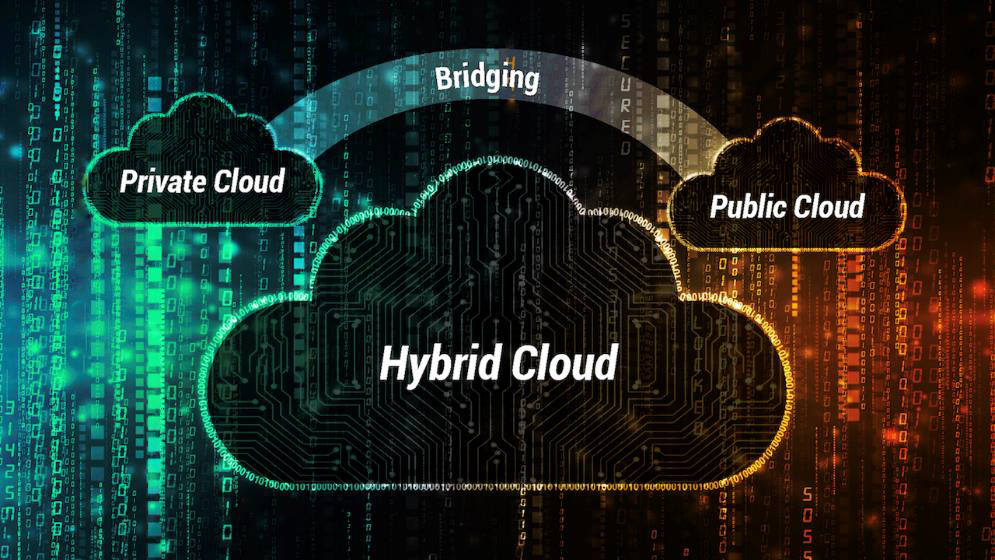
Hybrid cloud combines cloudservices with private or on-premises environments. For many establishedenterprises, this is less a temporary stage and more a practical operatingreality. And not every application modernizes at the same pace, and not everyworkload has the same requirements.

Multi-cloud introduces servicesfrom more than one cloud provider. It can provide access to specializedcapabilities, accommodate acquisitions or business-unit requirements, andreduce certain forms of dependency. But it also introduces another layer ofoperational complexity.

The labels are useful. The workloaddecisions behind them matter more.

Start With the Workload, Not theCloud

Before choosing where anapplication should run, understand what the application needs.

How critical is it to the business?What other systems does it depend on? Where does its data need to reside? Howsensitive is it to latency? How quickly does demand change? Does it needmodernization before migration?

Two applications within the sameorganization can produce completely different answers.

A customer-facing applicationexperiencing unpredictable demand may benefit from public-cloud elasticity. Abusiness-critical legacy application with tightly coupled dependencies may needmodernization before migration delivers meaningful value. A workload subject tospecific data or operational requirements may be better suited to a private orhybrid environment.

This is why a cloud strategy shouldnot become a mandate to move everything to the same destination.

Workload placement should followbusiness and technical requirements, not architectural fashion.

Migration and Modernization AreDifferent Decisions

Moving an application to cloudinfrastructure does not automatically modernize it.

A lift-and-shift migration may beentirely appropriate when speed, infrastructure consolidation, or data-centreexit is the immediate objective. But moving a legacy application withoutaddressing its architectural limitations can simply relocate existingcomplexity.

For other workloads, modernizationmay create more value: containerization, application refactoring, APIenablement, database modernization, or redesigning parts of the application touse cloud-native services.

Intertec's approach to applicationmodernization reflects this distinction by considering applications,infrastructure, and data together, rather than treating migration as the endobjective.

The decision, therefore, is notonly where this application should run. It is also: what should thisapplication become?

Security, Compliance andSovereignty Need to Be Designed In

Data location is only one part ofcloud governance.

Enterprises also need to considerwho can access workloads, how identities are managed, where encryption keys arecontrolled, how environments are monitored, what regulatory obligations apply,and how quickly services can be recovered when something goes wrong.

For organizations operating acrossjurisdictions, these questions can become particularly important.

Cloud architecture should thereforeaccount for security, compliance, resilience, and sovereignty from thebeginning, not as controls added after workloads have already been distributedacross environments.

The more complex the cloud estatebecomes, the more important consistent policies and visibility become.

Hybrid Cloud Works When theEnvironments Work Together

Hybrid cloud is sometimes describedsimply as keeping some systems on-premises while moving others to public cloud.

That definition misses the harderpart.

The real challenge is operatingthose environments coherently.

Identity, security, monitoring,deployment standards, network connectivity, and governance need to work acrossboundaries. Otherwise, an organization may technically have a hybrid cloud butoperationally still be managing separate technology islands.

Hybrid therefore makes sense whenthere is a clear reason for different workloads to live in differentenvironments and the organization can manage them as part of a common operatingmodel.

Multi-Cloud Needs a Business Case

The same discipline should apply tomulti-cloud. Using multiple providers can be entirely justified. A particularprovider may offer a capability the business needs. An acquisition mayintroduce another platform. Regulatory, geographic, or resilience requirementsmay influence the architecture. But multi-cloud should not be treated as ameasure of cloud maturity. Every additional environment introduces another setof skills, security controls, commercial models, monitoring requirements, andoperational processes.

Before adding another provider, ask,

What business or technicalrequirement does this solve that our current environment cannot?

If there isn't a convincing answer,additional choice can quickly become additional complexity.

Cloud Economics Continue AfterMigration

The business case for cloud shouldnot end when migration is completed.

Consumption changes. Resourcesbecome underutilized. Data-transfer charges emerge. Licensing evolves. Newservices are provisioned and sometimes forgotten.

This is why cloud cost managementis increasingly an operating discipline rather than an annual budgetingexercise.

FinOps brings technology, finance,and operations into that conversation. Instead of asking only whether cloud spendingis rising or falling, organizations can understand what they are spending, whois consuming it, and whether that consumption is delivering the expectedbusiness value.

Intertec incorporates FinOps intoits broader cloud approach to help organizations establish visibility,accountability, and continuous optimization across cloud environments.

Can You Operate the ArchitectureYou Choose?

A technically elegant cloudarchitecture can still fail if the organization cannot operate it effectively.

Hybrid and multi-cloud environmentsrequire capabilities across architecture, security, automation, DevSecOps,observability, reliability, cost management, and governance.

This makes the operating model partof the architecture decision itself.

Organizations need to decide whatshould remain with internal teams, what can be automated, and where managedservices can provide skills, operational consistency, or 24/7 coverage thatwould otherwise be difficult to maintain.

The question is not only “Can webuild this?”

It is “Can we run it well for thenext five years?”

The Right Cloud Model Is the OneYou Can Keep Right

There is no universally correctdestination for every enterprise workload.

The better cloud strategy can makedifferent choices deliberately: public where scalability and managed servicescreate value, private where greater control is required, hybrid where workloadshave different needs, and multi-cloud where there is a clear reason formultiple providers.

But architecture is only thebeginning.

Applications evolve. Regulationschange. Cloud economics shift. New services become available. Businesspriorities move. That means the right cloud model today should not becometomorrow's constraint.

Intertec approaches cloudtransformation across the lifecycle, from discovery and planning to migrationand modernization, automation, FinOps, security, governance, and managed cloudoperations. The objective is not simply to determine where a workload shouldrun, but to build an environment that the organization can continue to secure,govern, optimize, and evolve as its requirements change.

Because ultimately, the best cloudarchitecture is not the one with the most platforms. It is the one where everyworkload has a reason for being where it is.

Not Sure Which Cloud Model FitsYour Business?

Assess your current cloud andapplication landscape with Intertec and build a roadmap around the workloads,risks, and business outcomes that matter.

Click here to learnmore: https://www.intertecsystems.com/services/cloud, https://www.intertecsystems.com/services/cloud/cloud-adoption-migration

Thank you! Your submission has been received!
Oops! Something went wrong while submitting the form.
Related Topics

Cloud

Technology

AI & ML

Data Science

Hacking

How to Choose the Right Cloud Model for Your Business: A Practical Enterprise Guide

Published:
July 16, 2025

For most enterprises, choosing acloud model is no longer a decision between staying on-premises and movingeverything to the public cloud.

The reality is more complicated.Organizations are running a mix of legacy applications, cloud-native platforms,SaaS products, data-intensive workloads, and business-critical systems built atdifferent points in time. Some can move easily. Some need to be modernizedfirst. Others may have good reasons to remain where they are.

So, the question is not simply“Which cloud should we choose?”

A better question is: Whichenvironment makes sense for each workload, and can we operate that combinationsecurely, efficiently, and at scale?

That shift in thinking is importantbecause public, private, hybrid, and multi-cloud are not competing answers tothe same problem. They are architectural choices that serve different businessand technology requirements.

Public, Private, Hybrid, or Multi-Cloud:What Actually Changes?

Public cloud offers scalability,broad managed services, and the ability to provision technology without owningthe underlying infrastructure. For organizations building new digital servicesor responding to changing demand, that flexibility can be compelling.

Private cloud provides dedicatedinfrastructure and greater control over the operating environment. It canremain relevant where specific security, regulatory, integration, or workloadrequirements make dedicated infrastructure preferable.

Hybrid cloud combines cloudservices with private or on-premises environments. For many establishedenterprises, this is less a temporary stage and more a practical operatingreality. And not every application modernizes at the same pace, and not everyworkload has the same requirements.

Multi-cloud introduces servicesfrom more than one cloud provider. It can provide access to specializedcapabilities, accommodate acquisitions or business-unit requirements, andreduce certain forms of dependency. But it also introduces another layer ofoperational complexity.

The labels are useful. The workloaddecisions behind them matter more.

Start With the Workload, Not theCloud

Before choosing where anapplication should run, understand what the application needs.

How critical is it to the business?What other systems does it depend on? Where does its data need to reside? Howsensitive is it to latency? How quickly does demand change? Does it needmodernization before migration?

Two applications within the sameorganization can produce completely different answers.

A customer-facing applicationexperiencing unpredictable demand may benefit from public-cloud elasticity. Abusiness-critical legacy application with tightly coupled dependencies may needmodernization before migration delivers meaningful value. A workload subject tospecific data or operational requirements may be better suited to a private orhybrid environment.

This is why a cloud strategy shouldnot become a mandate to move everything to the same destination.

Workload placement should followbusiness and technical requirements, not architectural fashion.

Migration and Modernization AreDifferent Decisions

Moving an application to cloudinfrastructure does not automatically modernize it.

A lift-and-shift migration may beentirely appropriate when speed, infrastructure consolidation, or data-centreexit is the immediate objective. But moving a legacy application withoutaddressing its architectural limitations can simply relocate existingcomplexity.

For other workloads, modernizationmay create more value: containerization, application refactoring, APIenablement, database modernization, or redesigning parts of the application touse cloud-native services.

Intertec's approach to applicationmodernization reflects this distinction by considering applications,infrastructure, and data together, rather than treating migration as the endobjective.

The decision, therefore, is notonly where this application should run. It is also: what should thisapplication become?

Security, Compliance andSovereignty Need to Be Designed In

Data location is only one part ofcloud governance.

Enterprises also need to considerwho can access workloads, how identities are managed, where encryption keys arecontrolled, how environments are monitored, what regulatory obligations apply,and how quickly services can be recovered when something goes wrong.

For organizations operating acrossjurisdictions, these questions can become particularly important.

Cloud architecture should thereforeaccount for security, compliance, resilience, and sovereignty from thebeginning, not as controls added after workloads have already been distributedacross environments.

The more complex the cloud estatebecomes, the more important consistent policies and visibility become.

Hybrid Cloud Works When theEnvironments Work Together

Hybrid cloud is sometimes describedsimply as keeping some systems on-premises while moving others to public cloud.

That definition misses the harderpart.

The real challenge is operatingthose environments coherently.

Identity, security, monitoring,deployment standards, network connectivity, and governance need to work acrossboundaries. Otherwise, an organization may technically have a hybrid cloud butoperationally still be managing separate technology islands.

Hybrid therefore makes sense whenthere is a clear reason for different workloads to live in differentenvironments and the organization can manage them as part of a common operatingmodel.

Multi-Cloud Needs a Business Case

The same discipline should apply tomulti-cloud. Using multiple providers can be entirely justified. A particularprovider may offer a capability the business needs. An acquisition mayintroduce another platform. Regulatory, geographic, or resilience requirementsmay influence the architecture. But multi-cloud should not be treated as ameasure of cloud maturity. Every additional environment introduces another setof skills, security controls, commercial models, monitoring requirements, andoperational processes.

Before adding another provider, ask,

What business or technicalrequirement does this solve that our current environment cannot?

If there isn't a convincing answer,additional choice can quickly become additional complexity.

Cloud Economics Continue AfterMigration

The business case for cloud shouldnot end when migration is completed.

Consumption changes. Resourcesbecome underutilized. Data-transfer charges emerge. Licensing evolves. Newservices are provisioned and sometimes forgotten.

This is why cloud cost managementis increasingly an operating discipline rather than an annual budgetingexercise.

FinOps brings technology, finance,and operations into that conversation. Instead of asking only whether cloud spendingis rising or falling, organizations can understand what they are spending, whois consuming it, and whether that consumption is delivering the expectedbusiness value.

Intertec incorporates FinOps intoits broader cloud approach to help organizations establish visibility,accountability, and continuous optimization across cloud environments.

Can You Operate the ArchitectureYou Choose?

A technically elegant cloudarchitecture can still fail if the organization cannot operate it effectively.

Hybrid and multi-cloud environmentsrequire capabilities across architecture, security, automation, DevSecOps,observability, reliability, cost management, and governance.

This makes the operating model partof the architecture decision itself.

Organizations need to decide whatshould remain with internal teams, what can be automated, and where managedservices can provide skills, operational consistency, or 24/7 coverage thatwould otherwise be difficult to maintain.

The question is not only “Can webuild this?”

It is “Can we run it well for thenext five years?”

The Right Cloud Model Is the OneYou Can Keep Right

There is no universally correctdestination for every enterprise workload.

The better cloud strategy can makedifferent choices deliberately: public where scalability and managed servicescreate value, private where greater control is required, hybrid where workloadshave different needs, and multi-cloud where there is a clear reason formultiple providers.

But architecture is only thebeginning.

Applications evolve. Regulationschange. Cloud economics shift. New services become available. Businesspriorities move. That means the right cloud model today should not becometomorrow's constraint.

Intertec approaches cloudtransformation across the lifecycle, from discovery and planning to migrationand modernization, automation, FinOps, security, governance, and managed cloudoperations. The objective is not simply to determine where a workload shouldrun, but to build an environment that the organization can continue to secure,govern, optimize, and evolve as its requirements change.

Because ultimately, the best cloudarchitecture is not the one with the most platforms. It is the one where everyworkload has a reason for being where it is.

Not Sure Which Cloud Model FitsYour Business?

Assess your current cloud andapplication landscape with Intertec and build a roadmap around the workloads,risks, and business outcomes that matter.

Click here to learnmore: https://www.intertecsystems.com/services/cloud, https://www.intertecsystems.com/services/cloud/cloud-adoption-migration
Ready to Take Control of Your Finances?

Thank you! Your submission has been received!
Oops! Something went wrong while submitting the form.
30 days free trail
No credit card required

For most enterprises, choosing acloud model is no longer a decision between staying on-premises and movingeverything to the public cloud.

The reality is more complicated.Organizations are running a mix of legacy applications, cloud-native platforms,SaaS products, data-intensive workloads, and business-critical systems built atdifferent points in time. Some can move easily. Some need to be modernizedfirst. Others may have good reasons to remain where they are.

So, the question is not simply“Which cloud should we choose?”

A better question is: Whichenvironment makes sense for each workload, and can we operate that combinationsecurely, efficiently, and at scale?

That shift in thinking is importantbecause public, private, hybrid, and multi-cloud are not competing answers tothe same problem. They are architectural choices that serve different businessand technology requirements.

Public, Private, Hybrid, or Multi-Cloud:What Actually Changes?

Public cloud offers scalability,broad managed services, and the ability to provision technology without owningthe underlying infrastructure. For organizations building new digital servicesor responding to changing demand, that flexibility can be compelling.

Private cloud provides dedicatedinfrastructure and greater control over the operating environment. It canremain relevant where specific security, regulatory, integration, or workloadrequirements make dedicated infrastructure preferable.

Hybrid cloud combines cloudservices with private or on-premises environments. For many establishedenterprises, this is less a temporary stage and more a practical operatingreality. And not every application modernizes at the same pace, and not everyworkload has the same requirements.

Multi-cloud introduces servicesfrom more than one cloud provider. It can provide access to specializedcapabilities, accommodate acquisitions or business-unit requirements, andreduce certain forms of dependency. But it also introduces another layer ofoperational complexity.

The labels are useful. The workloaddecisions behind them matter more.

Start With the Workload, Not theCloud

Before choosing where anapplication should run, understand what the application needs.

How critical is it to the business?What other systems does it depend on? Where does its data need to reside? Howsensitive is it to latency? How quickly does demand change? Does it needmodernization before migration?

Two applications within the sameorganization can produce completely different answers.

A customer-facing applicationexperiencing unpredictable demand may benefit from public-cloud elasticity. Abusiness-critical legacy application with tightly coupled dependencies may needmodernization before migration delivers meaningful value. A workload subject tospecific data or operational requirements may be better suited to a private orhybrid environment.

This is why a cloud strategy shouldnot become a mandate to move everything to the same destination.

Workload placement should followbusiness and technical requirements, not architectural fashion.

Migration and Modernization AreDifferent Decisions

Moving an application to cloudinfrastructure does not automatically modernize it.

A lift-and-shift migration may beentirely appropriate when speed, infrastructure consolidation, or data-centreexit is the immediate objective. But moving a legacy application withoutaddressing its architectural limitations can simply relocate existingcomplexity.

For other workloads, modernizationmay create more value: containerization, application refactoring, APIenablement, database modernization, or redesigning parts of the application touse cloud-native services.

Intertec's approach to applicationmodernization reflects this distinction by considering applications,infrastructure, and data together, rather than treating migration as the endobjective.

The decision, therefore, is notonly where this application should run. It is also: what should thisapplication become?


Security, Compliance andSovereignty Need to Be Designed In

Data location is only one part ofcloud governance.

Enterprises also need to considerwho can access workloads, how identities are managed, where encryption keys arecontrolled, how environments are monitored, what regulatory obligations apply,and how quickly services can be recovered when something goes wrong.

For organizations operating acrossjurisdictions, these questions can become particularly important.

Cloud architecture should thereforeaccount for security, compliance, resilience, and sovereignty from thebeginning, not as controls added after workloads have already been distributedacross environments.

The more complex the cloud estatebecomes, the more important consistent policies and visibility become.

Hybrid Cloud Works When theEnvironments Work Together

Hybrid cloud is sometimes describedsimply as keeping some systems on-premises while moving others to public cloud.

That definition misses the harderpart.

The real challenge is operatingthose environments coherently.

Identity, security, monitoring,deployment standards, network connectivity, and governance need to work acrossboundaries. Otherwise, an organization may technically have a hybrid cloud butoperationally still be managing separate technology islands.

Hybrid therefore makes sense whenthere is a clear reason for different workloads to live in differentenvironments and the organization can manage them as part of a common operatingmodel.

Multi-Cloud Needs a Business Case

The same discipline should apply tomulti-cloud. Using multiple providers can be entirely justified. A particularprovider may offer a capability the business needs. An acquisition mayintroduce another platform. Regulatory, geographic, or resilience requirementsmay influence the architecture. But multi-cloud should not be treated as ameasure of cloud maturity. Every additional environment introduces another setof skills, security controls, commercial models, monitoring requirements, andoperational processes.

Before adding another provider, ask,

What business or technicalrequirement does this solve that our current environment cannot?

If there isn't a convincing answer,additional choice can quickly become additional complexity.

Cloud Economics Continue AfterMigration

The business case for cloud shouldnot end when migration is completed.

Consumption changes. Resourcesbecome underutilized. Data-transfer charges emerge. Licensing evolves. Newservices are provisioned and sometimes forgotten.

This is why cloud cost managementis increasingly an operating discipline rather than an annual budgetingexercise.

FinOps brings technology, finance,and operations into that conversation. Instead of asking only whether cloud spendingis rising or falling, organizations can understand what they are spending, whois consuming it, and whether that consumption is delivering the expectedbusiness value.

Intertec incorporates FinOps intoits broader cloud approach to help organizations establish visibility,accountability, and continuous optimization across cloud environments.

Can You Operate the ArchitectureYou Choose?

A technically elegant cloudarchitecture can still fail if the organization cannot operate it effectively.

Hybrid and multi-cloud environmentsrequire capabilities across architecture, security, automation, DevSecOps,observability, reliability, cost management, and governance.

This makes the operating model partof the architecture decision itself.

Organizations need to decide whatshould remain with internal teams, what can be automated, and where managedservices can provide skills, operational consistency, or 24/7 coverage thatwould otherwise be difficult to maintain.

The question is not only “Can webuild this?”

It is “Can we run it well for thenext five years?”

The Right Cloud Model Is the OneYou Can Keep Right

There is no universally correctdestination for every enterprise workload.

The better cloud strategy can makedifferent choices deliberately: public where scalability and managed servicescreate value, private where greater control is required, hybrid where workloadshave different needs, and multi-cloud where there is a clear reason formultiple providers.

But architecture is only thebeginning.

Applications evolve. Regulationschange. Cloud economics shift. New services become available. Businesspriorities move. That means the right cloud model today should not becometomorrow's constraint.

Intertec approaches cloudtransformation across the lifecycle, from discovery and planning to migrationand modernization, automation, FinOps, security, governance, and managed cloudoperations. The objective is not simply to determine where a workload shouldrun, but to build an environment that the organization can continue to secure,govern, optimize, and evolve as its requirements change.

Because ultimately, the best cloudarchitecture is not the one with the most platforms. It is the one where everyworkload has a reason for being where it is.

Not Sure Which Cloud Model FitsYour Business?

Assess your current cloud andapplication landscape with Intertec and build a roadmap around the workloads,risks, and business outcomes that matter.

Click here to learnmore: https://www.intertecsystems.com/services/cloud, https://www.intertecsystems.com/services/cloud/cloud-adoption-migration