
Hunter (Prince) Ransomware is a malicious data-encrypting malware that locks files, appends the “.Hunter” extension, and demands a ransom for decryption. It spreads through phishing emails, malicious downloads and software vulnerabilities, making data recovery challenging without backups. Cybersecurity experts strongly discourage paying the ransom, as there is no guarantee of receiving a functional decryption tool. To mitigate the risk, implementing preventive measures such as regular backups, timely software updates and cautious email handling is essential.
Ransomware continues to be one of the most disruptive and costly cyber threats, locking victims out of their data and demanding payment for possible recovery. Hunter, a variant of Prince Ransomware, follows this malicious pattern by encrypting files, altering their names and forcing victims into paying attackers. Gaining insight into how this ransomware operates and adopting strong security measures is essential to reducing the risk.
Ransomware is a type of malware designed to encrypt files and demand payment for their decryption. These programs use advanced encryption algorithms, making data recovery nearly impossible without the decryption key. Once executed, ransomware scans a system for specific file types, encrypts them and then displays a ransom note.
Hunter Ransomware is an advanced variant of Prince Ransomware, designed to encrypt data and render it inaccessible to victims. Upon execution, it appends the ‘Hunter‘ extension to encrypted files, altering their names. In addition to file encryption, Hunter leaves a ransom note titled ‘Decryption Instructions.txt’ and changes the desktop wallpaper, making the attack immediately apparent to the victim.
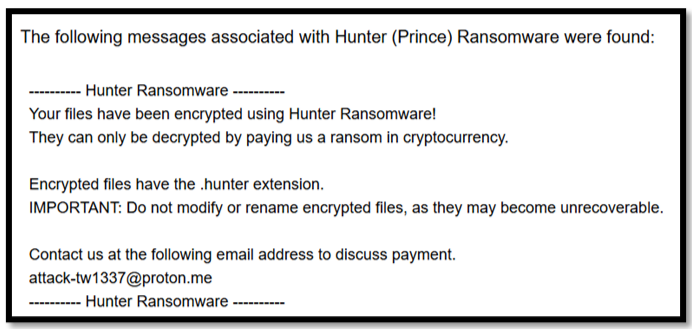
For instance, a file originally named ‘document.pdf’ would be renamed to ‘document.pdf.Hunter,’ indicating that it has been encrypted and is no longer accessible to the victim. This alteration serves as a clear sign of the attack and confirms that the data has been compromised. The accompanying ransom note warns victims that their files are locked and demands payment typically in cryptocurrency for the decryption tool. It also advises against modifying or renaming encrypted files, as doing so may result in permanent data loss.
The ransom note informs the victim that their files have been encrypted. It demands a ransom payment in cryptocurrency for the files to be decrypted. Also, the note advises against modifying or renaming the encrypted files, as doing so may make them unrecoverable. The victim is instructed to contact the attackers at the provided email address, attack-tw1337@proton.me.
Hunter (Prince) Ransomware follows this established pattern, locking access to critical documents, media files and other essential data. Victims are left with limited choices: pay the ransom or attempt alternative recovery methods. Given the severe financial and operational consequences of such attacks, the best defense against ransomware is prevention—ensuring that vital files are regularly backed up and stored securely, either offline or in a cloud-based location separate from the primary system
Cybersecurity professionals strongly discourage paying ransoms, as it fuels the development of more ransomware and encourages additional attacks. By meeting the attackers’ demands, victims inadvertently contribute to the growth of ransomware operations, making them more lucrative for cybercriminals. Instead of paying, affected users should focus on removing the malware from their systems and exploring secure data recovery options, such as using decryption tools released by security firms or restoring data from offline backups.
Threat actors employ various tactics to spread Hunter Ransomware, aiming to maximize its reach. Some of the most common methods of infection include:
As ransomware threats continue to rise, individuals and businesses must adopt strong cybersecurity practices. This includes being cautious with emails, especially from unknown senders, and verifying their legitimacy before clicking links or downloading attachments. Downloading software only from trusted sources, avoiding pirated content and enabling multi-layered security can also help. Regularly updating systems and applications, along with maintaining secure, up-to-date backups, ensures data recovery without relying on cybercriminals.
Hunter (Prince) Ransomware can severely impact organizations, causing data loss, financial setbacks, operational disruptions and reputational harm. Encrypted files can halt business operations, leading to downtime and reduced productivity. Paying the ransom offers no guarantee of data recovery and may encourage future attacks. Additionally, if sensitive business or customer data is compromised, organizations may face regulatory fines and legal consequences.
Recommendations for Organizations to Mitigate Hunter (Prince) Ransomware Threat
1. Apply Patches Immediately – Update all affected Veeam products to the latest patched versions to mitigate the security risk.
2. Regular Data Backups – Maintain frequent backups of critical data in offline or secure cloud locations to ensure recovery without relying on attackers.
3.Enhance Email Security – Deploy email filtering solutions and train employees to identify and avoid phishing emails, malicious attachments, and suspicious links.
4. Keep Systems and Software Updated – Regularly update operating systems, applications, and security software to patch vulnerabilities that ransomware exploits. Implement a robust patch management strategy.
5. Deploy Advanced Security Solutions – Use next-generation antivirus, endpoint detection and response (EDR) and firewalls to detect and block ransomware threats before they infiltrate the network.
6. Restrict User Privileges – Apply the principle of least privilege (PoLP) to limit employee access to only necessary data and applications, reducing the spread of ransomware in case of infection.
7. Implement Network Segmentation – Isolate critical systems and sensitive data from general user environments to prevent ransomware from spreading across the entire network.
Act Quickly if Infected – If a ransomware attack is suspected, immediately disconnect the device from all networks and external storage to prevent further spread.
https://www.pcrisk.com/removal-guides/32074-hunter-prince-ransomware


