





Why Enterprises Are Turning to Managed Security Services

In today’s digital-first economy, cybersecurity is no longer just an IT concern it has become a critical business priority. As organizations accelerate digital transformation, migrate workloads to the cloud, and adopt emerging technologies such as AI and IoT, the enterprise attack surface continues to expand.
At the same time, cyber threats are becoming more sophisticated and persistent. Ransomware attacks, insider threats, and advanced malware are forcing enterprises to rethink how they protect critical systems, sensitive data, and business operations.
This growing risk landscape is driving organizations toward Managed Security Services (MSS). The global managed security services market is expected to grow significantly, reaching nearly $66.8 billion by 2030, driven by the increasing demand for 24/7 monitoring, proactive threat detection, and incident response capabilities
(Source: MarketsandMarkets – https://www.marketsandmarkets.com/Market-Reports/managed-security-services-market-5918403.html).
For many enterprises, the question is no longer whether to adopt managed security services, but how quickly to implement them to strengthen their cybersecurity posture and stay ahead of evolving threats.
The Enterprise Cybersecurity Challenge
Modern enterprises face several cybersecurity challenges that traditional security models struggle to address.
Expanding Attack Surface
With hybrid cloud environments, remote work, and connected devices, enterprise networks are more complex than ever. Each new digital touchpoint increases the potential entry points for attackers.
- Shortage of Cybersecurity Talent
Organizations worldwide are facing a shortage of skilled cybersecurity professionals. Maintaining a fully staffed internal security operations team capable of monitoring threats around the clock is both difficult and expensive.
- Increasing Threat Sophistication
Cybercriminals are using advanced techniques such as AI-powered attacks, phishing campaigns, and supply chain exploits to bypass traditional defences.
- Compliance and Regulatory Pressure
Enterprises must comply with multiple security regulations and industry standards. Ensuring continuous compliance while managing daily security operations can place significant pressure on internal teams.
These challenges are why many organizations are adopting Managed Security Service Providers (MSSPs) to augment their internal security capabilities.
What Are Managed Security Services
Managed Security Services involve outsourcing security monitoring and management to a specialized provider that acts as an extension of the enterprise security team. These providers monitor systems, investigate threats, and respond to incidents on behalf of the organization.
Typical managed security services include:
- 24/7 security monitoring
- Threat detection and incident response
- Vulnerability management
- Security operations center (SOC) services
- Compliance monitoring and reporting
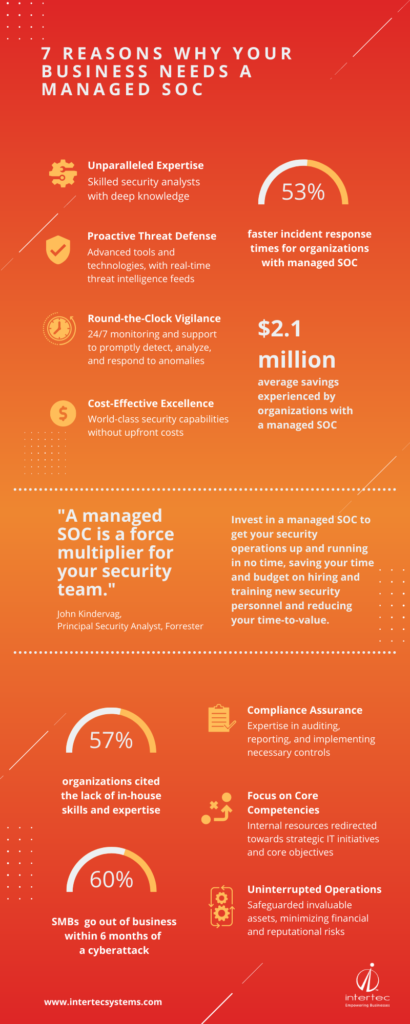
By leveraging a managed service model, enterprises gain access to advanced cybersecurity expertise and tools without the cost of building a large in-house security operations team.
Why Enterprises Are Switching to Managed Security Services
Managed security services provide several advantages that are increasingly attractive to modern enterprises.
- Continuous Threat Monitoring
Cyber threats can occur at any time. Managed security providers operate 24/7 Security Operations Centers that continuously monitor enterprise systems, networks, and applications to detect suspicious activity in real time.
- Access to Specialized Security Expertise
Managed security providers employ cybersecurity specialists who focus exclusively on threat analysis, incident response, and security architecture. This allows enterprises to access advanced expertise that may not exist internally.
- Faster Incident Detection and Response
When security incidents occur, rapid response is critical. Managed services help organizations detect threats earlier and respond more effectively, minimizing the potential impact on operations.
- Reduced Operational Complexity
Managing multiple security tools, alerts, and compliance requirements can overwhelm internal IT teams. Managed services simplify operations by consolidating monitoring, analysis, and reporting into a centralized security framework.
- Cost Efficiency
Building and maintaining a fully operational security operations center requires significant investment in infrastructure, tools, and personnel. Managed security services provide enterprise-grade security capabilities at a predictable operational cost.
The Role of Security Operations Centers in Managed Security
At the core of most managed security services is the Security Operations Center (SOC). SOC teams continuously analyze security events, investigate anomalies, and coordinate incident response activities.
Modern SOC environments use advanced technologies such as:
- threat intelligence platforms
- AI-driven analytics
- automated incident response tools
- vulnerability scanning and monitoring systems
These capabilities allow enterprises to move from reactive security to proactive threat detection.
Enabling Enterprise Security with Intertec
As enterprises navigate increasingly complex threat environments, they require security strategies that are both comprehensive and scalable.
Intertec Systems provides SOC-driven managed security services designed to help enterprises detect, prevent, and respond to cyber threats more effectively. Through integrated cybersecurity solutions and managed services, Intertec enables organizations to strengthen their security posture while maintaining operational efficiency.
Intertec’s managed security capabilities include:
- 24/7 Security Operations Center monitoring
- Threat intelligence and incident response
- Vulnerability management and risk assessment
- Security compliance and governance support
- Integration with enterprise IT and cloud environments
By combining advanced technology with experienced cybersecurity professionals, Intertec helps enterprises build resilient security frameworks capable of addressing modern cyber threats.
The Future of Enterprise Security
Cybersecurity will continue to evolve as organizations adopt new technologies and expand their digital ecosystems. Enterprises will need security strategies that are flexible, scalable, and capable of adapting to emerging threats.
Managed security services are becoming a key component of this strategy. By partnering with specialized providers, organizations can enhance their security operations while allowing internal teams to focus on core business initiatives.
Enterprises that adopt proactive security models today will be better prepared to defend against tomorrow’s cyber threats.
To Wrap Up
In today’s digital landscape, cybersecurity is no longer optional—it is fundamental to business resilience. As cyber threats grow in scale and sophistication, enterprises must ensure they have the expertise, technology, and processes required to protect critical systems and data.
Managed security services offer a practical and scalable approach to achieving this goal. By leveraging dedicated security expertise, continuous monitoring, and advanced threat intelligence, enterprises can strengthen their defenses while maintaining operational agility.
With its expertise in cybersecurity, managed services, and digital transformation, Intertec Systems helps organizations build secure, resilient IT environments that support innovation and growth.




































%20(1).jpg)
.jpg)


.jpg)











.jpg)